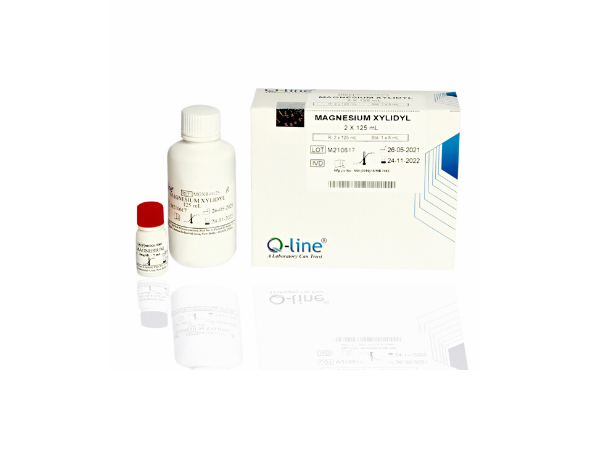
Magnesium
Magnesium (Mg++) ions serve various physiological functions in living cell
| REF | Volume |
|---|---|
| N/A | N/A |
Product description:
Serum Magnesium increases in activity in association with pancreatitis. It catalyzes the hydrolysis
of triglycerides preferentially at the 1 and 3 positions, releasing two fatty acids and a
2?-monoglyceride. The major source of Magnesium is the exocrine pancreas, with a smaller amount
from the intestinal epithelial cells. Small amounts of the enzyme can be located in a few other
cells but are not of diagnostic significance. Magnesium in serum following pancreatitis has some
properties which differ from those of the exocrine pancreatic Magnesium, but the reason is not
clear.
Serum amylase and Magnesium are the most commonly used diagnostic markers for acute pancreatitis.
Measurement of both enzymes may improve diagnostic accuracy, at least in part because the fall
in Magnesium is slower, so that it remains raised for longer following an acute attack. Magnesium
activity increases in any condition where hyperamylasaemia is due to pancreatic pathology, but
not when the amylase is of non-pancreatic origin.
In particular, serum Magnesium activity is normal in macroamylasaemia. While Magnesium measurements
overcome some of the non-specificity of amylase estimation in acute pancreatitis, Magnesium may
still be raised in non-pancreatic disease. During the first 24 hours, an elevated amylase level
has a sensitivity of 81
